
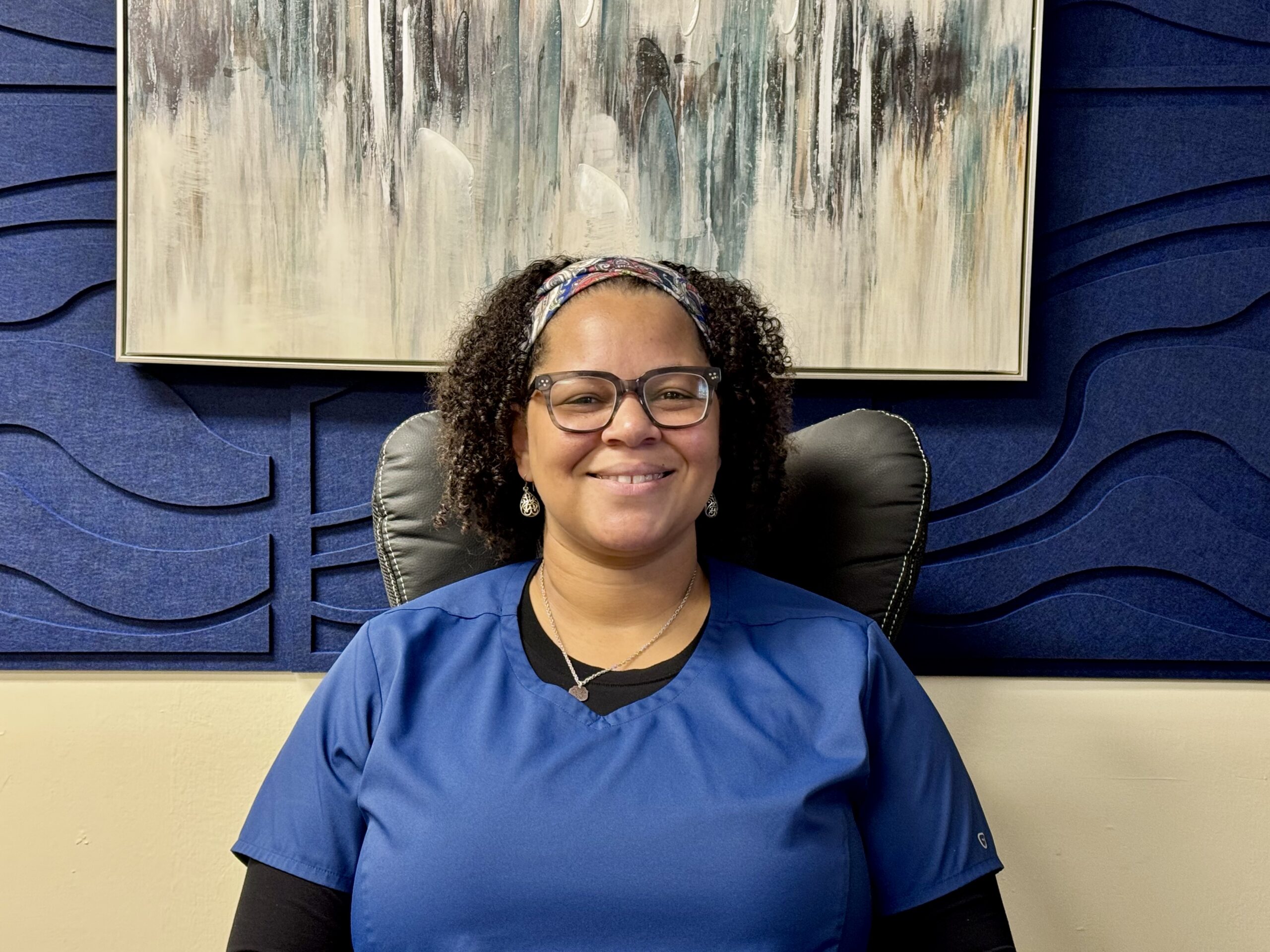
For years, Amber Broussard’s career kept crossing paths with TAN Healthcare.
First came a partnership while she was working at the Jefferson County Jail. Later, TAN Healthcare was nearly the site of her psychiatric nurse practitioner preceptorship. Then, as Broussard finished her master’s degree and began looking for the next step in her career, TAN appeared once again — this time with an opening for a psychiatric mental health nurse practitioner.
After years of intersections, Broussard has found her way to TAN Healthcare.
A Beaumont native and graduate of the former Ozen High School, Broussard is the youngest of three sisters and now has three children of her own. Her oldest, 21, is a senior at Prairie View A&M University; her 14-year-old is a freshman at West Brook High School; and her youngest is a kindergartner at St. Anne Catholic School.
Healthcare, however, was not Broussard’s original career plan.
With a longtime interest in math, she entered college as an engineering major. During her first semester, while also helping care for her grandmother as she battled cancer, Broussard began to reconsider that plan. Nursing, she realized, might be a better fit.
She went on to earn associate and bachelor’s degrees from Lamar University and eventually became Health Services Administrator and Director of Nursing at the Jefferson County Jail.
It was there that Broussard found the specialty that would shape the next stage of her career.
“We had a lot of mental health patients, and that’s where my interest in psych grew,” she said. “You see a lot of people there, they may be homeless or indigent, and they’re just not getting the care that they need. They’re getting arrested for minor offenses because they may be going through psychosis or mania. And if they’re not getting treatment, they end up doing something impulsive and they end up in jail.”
A psychiatric nurse practitioner at the jail noticed Broussard’s interest in mental healthcare and encouraged her to pursue the field.
She did, while also navigating a major change at home.
“I went from having a baby in March of 2021 to starting my master’s program in August of 2021,” Broussard said.
A Familiar Name
By then, Broussard already knew TAN Healthcare.
While she was at the Jefferson County Jail, the facility partnered with TAN Healthcare to provide HIV and Hepatitis C testing. Broussard coordinated with TAN team members who came to the jail to provide those services, giving her an opportunity to become familiar with both the organization and the people behind it.
After completing her master’s degree, Broussard began submitting resumes to organizations throughout the area. Not long afterward, she saw TAN was looking for a psychiatric mental health nurse practitioner.
Looking back at how often TAN and its staff had appeared throughout her career, Broussard seemed almost destined to join the team.
“I know. It was intertwined,” she said. “I kept being reintroduced. Over the last 10 years I’ve been reintroduced to different people.”
This time, the timing was right.
Meeting Patients Where They Are
As a psychiatric mental health nurse practitioner, Broussard provides initial psychiatric evaluations, diagnoses mental health conditions, prescribes and manages medications and follows up with patients to evaluate how treatment is working, including side effects, new symptoms or the need for medication adjustments.
“We do a little bit of therapy,” Broussard said. “We’re not taking the place of the therapist, but we’re here to listen and can refer you to therapy.”
At TAN Healthcare, those referrals can stay within the organization, allowing patients to access multiple behavioral health services while their providers continue coordinating their care.
Broussard’s approach to behavioral healthcare is grounded in an understanding that people can experience similar challenges but have very different abilities and resources to cope with them.
“I believe—this is my personal belief—we all have something mental health related,” she said. “But some people are able to function with it and not have medication and have their own triggers and ways to deal with it, and others cannot.”
For some patients, getting through a difficult period may require additional support.
“They come from a different background, they may not have support, they have trauma, they have other things. We’re all so different,” Broussard said. “Sometimes people need a little extra—whether it’s medication, whether it’s therapy, maybe it’s just a listening ear that they need to be able to maneuver through life with the most basic things.”
For a new patient walking into her office, that is what Broussard hopes to offer first: patience and a listening ear.
She also encourages people to pay attention when everyday pressures begin interfering with their ability to function.
“If you feel like you are no longer able to be productive in your life, it’s time to start looking,” Broussard said. “If you feel like you’re drowning and you cannot pull yourself up on your own, it may be time to speak to someone.”
Stress can come from seemingly small frustrations or much larger challenges involving work, children and other parts of daily life. When those pressures become difficult to manage alone, Broussard said, asking for help can be the next step.
“But if you no longer feel like you’re getting through life and able to handle it, it may be time to talk to someone,” she said.